Execution-Oriented AI Systems: Key AI Developments in Early March 2026
How orchestration efficiency is reshaping enterprise AI through tools, agents, context, connectivity, and multimodal execution
The key trend in early March 2026 was the rise of execution-oriented AI systems, where the core technical characteristic was not bigger models alone but more efficient orchestration across tools, agents, context, and workflows.
1. Introduction: Why the Key AI Developments in Early March 2026 Signal a New AI Phase
The key AI developments in early March 2026 show that AI is moving into a new phase. The market is no longer focused only on larger models or stronger benchmarks. It is increasingly focused on how effectively AI can use tools, manage context, coordinate agents, and operate inside real workflows.
What makes this shift important is that the value of AI now depends less on what a model can say and more on what a system can do. Features such as tool search, long-context handling, multi-agent collaboration, standardized connectivity, and multimodal execution all point to the same direction: AI is becoming more operational, more integrated, and more useful in practice.
This blog examines the key AI developments in early March 2026 through the lens of execution-oriented AI systems. Using an Industrial Engineering perspective grounded in optimization, reliability, and systems thinking, it analyzes seven important breakthroughs and asks which of them can truly help close the AI Value Gap.

2. Seven Key AI Developments in Early March 2026
The key AI developments in early March 2026 show how execution-oriented AI systems are evolving in practice.
GPT-5.4 and Dynamic Tool Search
- Runtime tool use: Tools are retrieved when needed, not loaded all at once.
- Why it matters: This improves efficiency, lowers overhead, and supports lighter system design.
Claude 4.6 Sonnet and Multi-Agent Collaboration
- Structured execution: AI is moving toward planning, coordination, and multi-step work.
- Why it matters: This makes AI more useful for complex workflows, not just single responses.
Gemini 3.1 Pro and Real-Time Visual Execution
- Operational multimodality: Visual output is becoming part of real work, not just demos.
- Why it matters: AI can better support dashboards, interfaces, and decision environments.
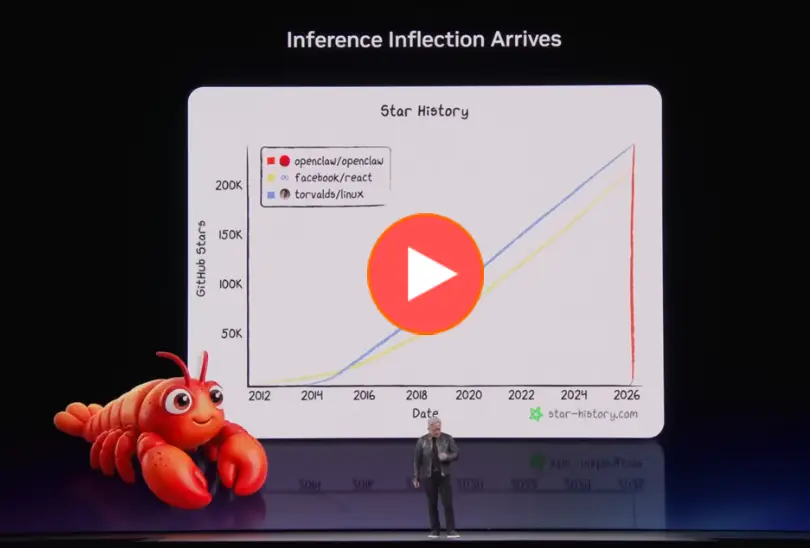
OpenClaw and the Rise of Action-Oriented AI
- Task completion: AI is increasingly expected to perform actions, not only provide answers.
- Why it matters: This shifts AI from assistant behavior to workflow execution.
MCP and Standardized AI Connectivity
- Interoperability: Models, tools, and data are moving toward common connection standards.
- Why it matters: This reduces fragmentation and improves enterprise scalability.
Context Caching and Long-Context Efficiency
- Reusable memory: Long context becomes more valuable when it can be compacted and reused.
- Why it matters: This improves speed and usability in document-heavy workflows.
Accelerated Computing and Real-Time Resource Optimization
- Infrastructure efficiency: AI performance now depends more on resource allocation and orchestration.
- Why it matters: Better compute efficiency improves cost, latency, and deployment quality.
Taken together, these seven developments show that AI progress is becoming less about isolated model improvement and more about building systems that execute work efficiently.
3. Five Technical Characteristics Defining Execution-Oriented AI Systems
The key AI developments in early March 2026 point to five technical characteristics that define execution-oriented AI systems.
Just-in-Time Tool Use
- Selective access: AI retrieves the right tool only when needed.
- Why it matters: This reduces overload and improves efficiency.
Multi-Agent Task Decomposition
- Structured collaboration: Work is divided across specialized agents.
- Why it matters: This improves coordination and reliability.
Standardized Connectivity
- Common interfaces: Models, tools, and data connect through shared standards.
- Why it matters: This reduces fragmentation and supports scale.
Long-Context Operationalization
- Reusable context: Long context becomes useful when it can be reused efficiently.
- Why it matters: This supports continuity in complex workflows.
Execution-Oriented Multimodality
- Practical multimodality: AI produces visual and interface outputs that support action.
- Why it matters: This makes AI more useful in real operating environments.
Together, these five characteristics show why AI is shifting from isolated model intelligence to more efficient execution systems.
4. What These Developments Mean When Viewed as One System
These seven developments matter most when viewed as one system, not as separate headlines. Together, they show that AI is becoming an execution layer built around tools, agents, context, connectivity, and compute.
- Tools are becoming dynamic. AI systems are retrieving capabilities at runtime instead of loading everything in advance.
- Agents are becoming structured. AI is moving from single responses to coordinated multi-step work.
- Context is becoming reusable. Long context now matters because it can support sustained workflows more efficiently.
- Connectivity is becoming infrastructure. Standardized protocols are making enterprise AI more interoperable and scalable.
- Execution is becoming the product. Users increasingly expect AI to complete tasks, not just generate answers.
The key point is simple: the key AI developments in early March 2026 show a shift from model-centric AI to execution-oriented AI systems. The real advantage now comes from better orchestration across the full workflow.
5. Industrial Engineering Perspective: Optimization, Reliability, and Systems Thinking
The key AI developments in early March 2026 are not important only because they improve model capability. They matter because they improve how AI systems are designed, coordinated, and deployed inside real operations. That is why an Industrial Engineering lens is useful here.
- Optimization:
Tool search, context compaction, and structured agent workflows reduce waste in token use, compute, and coordination. In IE terms, this is a move toward leaner system design. - Reliability:
Sonnet 4.6’s emphasis on coding, planning, computer use, and long-context work shows that the market is valuing sustained performance, not just impressive single-turn output. Reliability is becoming a core quality metric. - Systems thinking:
MCP’s 2026 roadmap makes clear that AI value increasingly depends on the interfaces between models, tools, governance, and enterprise infrastructure. The whole workflow matters more than any single model.
The Industrial Engineering lesson is simple: the winners will not be the organizations with the most impressive model demo, but the ones that design the most efficient and dependable AI system around real work.
6. The AI Value Gap: Which Developments Actually Improve Business ROI?
Not every March breakthrough will improve ROI at the same speed. The AI Value Gap appears when model capability advances faster than workflow design, integration, and governance. McKinsey’s 2025 survey says adoption is broad, but most organizations are still working to move from pilots to scaled impact.
- Near-term ROI: tool search, context efficiency, and standardized connectivity. These reduce friction, latency, and integration cost, making deployment easier.
- Higher upside, higher risk: multi-agent systems and action-oriented AI. They can create larger gains, but only with strong monitoring and control.
- Bottom line: business value comes from better system design, not model novelty alone. The fastest gains will come from AI that is cheaper to run, easier to connect, and more reliable in real workflow
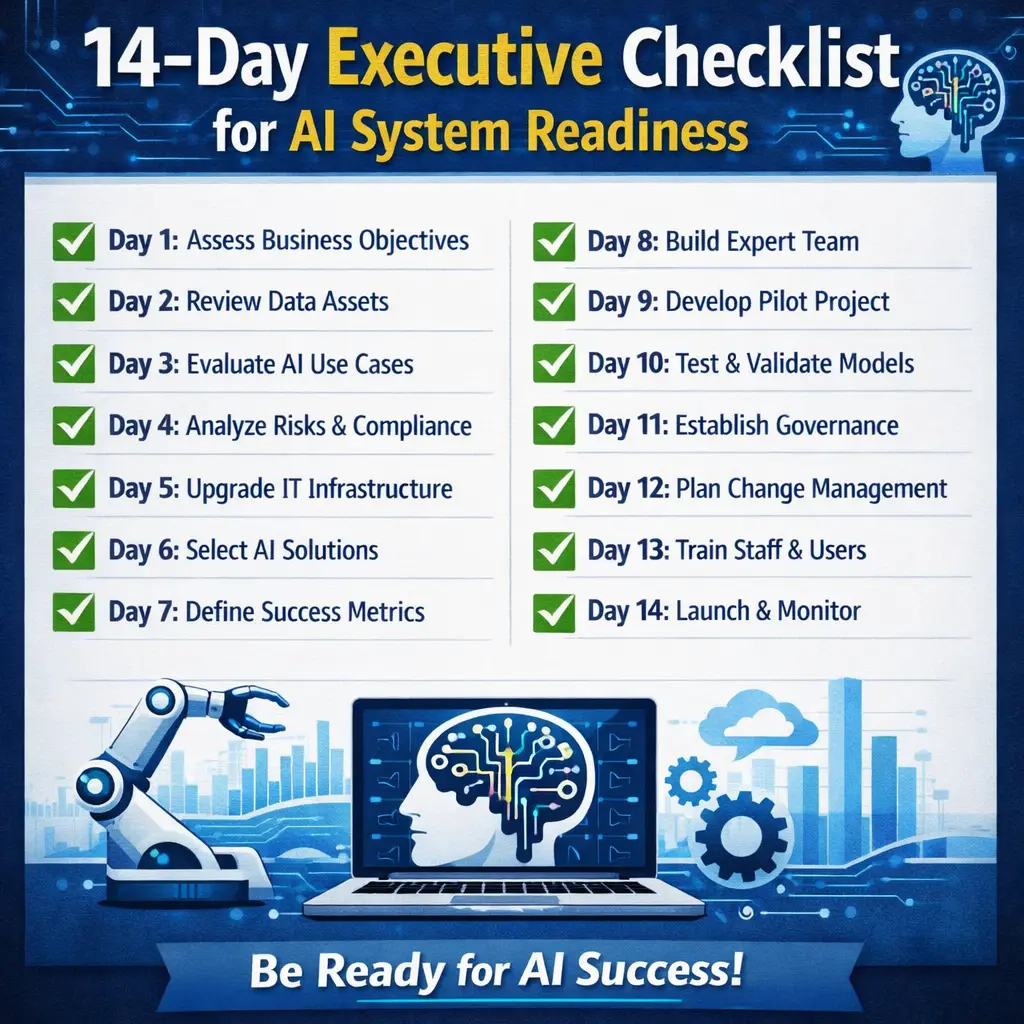
7. What Leaders Should Do Next: A 14-Day Executive Checklist
The key AI developments in early March 2026 suggest a simple next step: focus on system design, not model novelty alone. The goal over the next 14 days is to find one workflow where better orchestration can improve reliability, integration, or cost.
- Audit one workflow. Find where context is reloaded, tools are overused, or tasks are poorly divided.
- Run one controlled agent test. Keep human approval for exceptions and final decisions.
- Check your connectivity layer. Reduce brittle one-off integrations and move toward standardized links.
- Measure operational ROI. Track cycle time, error rate, rework, and latency, not just demo quality.
The immediate objective is not a full rebuild. It is to prove value in one real workflow.
8. Conclusion: The Shift Is from Smarter Models to Better Execution Systems
The key AI developments in early March 2026 point to one clear conclusion: AI is becoming less a standalone model and more an execution system for work. The real competitive edge is no longer just better output, but better orchestration across tools, agents, context, connectivity, and compute.
For leaders, that changes the priority. The question is not simply which model is most impressive, but which AI system is cheaper to run, easier to integrate, and more reliable in real workflows. That is where the AI Value Gap begins to close.
The main lesson from early March is simple: the next winners in AI will not be the organizations with the loudest demo, but the ones with the best-designed execution stack.